
Before you send an RFQ for wholesale baby toys, confirm ten things: supplier identity, SKU-level specifications, MOQ, carton quantity, packaging, lead-time confirmation, compliance documents, sample checks, price validity, and the RFQ questions themselves. Get these wrong and you either overpay per unit, sit on dead stock, or lose the shipment at customs. Get them right and the same product can carry double the margin. The checklist below is built around cost, margin, and MOQ trade-offs — because those three decide whether a line works at retail.
Key takeaways
- MOQ is a factory- and SKU-specific commercial term, not an industry standard. It moves with resin grade, mold, decoration, packaging, and order quantity — so never treat a quoted MOQ as fixed until you have it in writing against a specific SKU.
- A type-test or golden-sample report does not automatically cover a later production lot. Match report SKU, materials, colors, and production date or cohort to the purchase order before you release payment.
- Package dimensions and pieces per inner or carton must come from measured production packaging, not a preliminary artwork file. Wrong carton data inflates freight and breaks warehouse slotting.
- For low-cost baby toys, MOQ drives landed cost more than unit price. A $0.51 foam item at MOQ 1080 and a $7.62 magnetic block set at MOQ 120 have completely different cash-flow profiles.
- Final inspection should verify product, packaging, markings, quantity, documents, and test status before shipment release — not just the product itself.
Why margin math starts at MOQ, not unit price
A low unit price means nothing if the MOQ forces you to hold eighteen months of inventory. Take two real listings: a small color-printed butter cheese stick at $0.51 and MOQ 1080, versus a 96-piece magnetic block set at $7.62 and MOQ 120. The foam item looks cheap per piece, but your first order ties up roughly $551 in goods — plus freight, duty, and warehousing — before you sell a single unit. The magnetic set ties up about $914 but sells at a far higher retail price point. Both can work. They suit different buyers.
The rule: calculate landed cost at the MOQ you can actually afford to buy and store, not at the unit price you wish you could get. If the MOQ is too high, ask whether the factory offers a mixed-SKU container or a lower trial quantity before you walk away. Many will, especially on repeat-relationship terms.
What should you verify about the supplier before sending an RFQ?
Confirm the legal entity name, business license, and whether you are talking to a factory, a trading company, or an intermediary. This matters because MOQ, lead time, and price authority sit with different people in each case. Ask for the exact entity name that will appear on the commercial invoice and the bank account name — they should match. If they do not, stop.
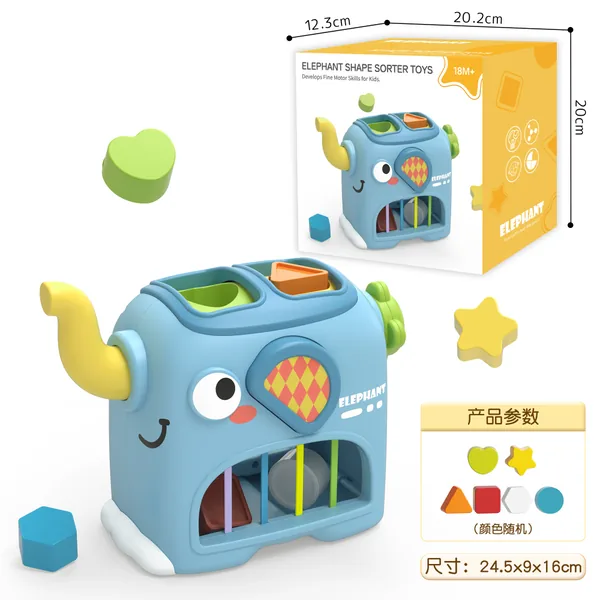
Then check what they actually make. A supplier listing ABS plastic toys, silicone/ABS sets, and PU polyurethane foam items may genuinely produce all three, or may be reselling. Ask which SKUs run on their own lines and which are outsourced. For baby toys, the material matters: eco-friendly ABS with geometric matching blocks, ABS with built-in permanent magnets, and slow-rebound PU foam have different mold, safety, and packaging requirements. One factory rarely masters all three equally.
Finally, ask for their standard RFQ response format. A supplier who answers in a structured sheet — SKU, material, MOQ, carton qty, lead time, price validity — is easier to work with than one who replies with a paragraph and a photo.
What SKU-level specifications belong on the RFQ?
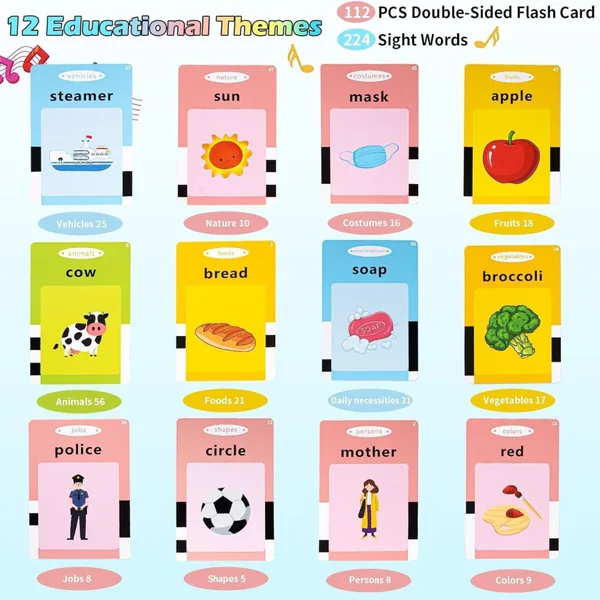
Write the RFQ against a single SKU, not a category. For an educational toy set, specify: exact product name, material composition, piece count, colorway, age grading, and any battery or electronic component. A 63 cm spray kitchen with lighting and water features, for example, is not package-electric and takes 3 × 1.5 AA batteries — that detail changes packaging, shipping classification, and retail compliance. If your RFQ says 'kitchen toy', you will get a quote for the wrong thing.
Include the retail channel too. A product sold through a sensory-corner program at private schools has different packaging and instruction-language needs than one sold on a mass-market shelf. If you need short instructions in a second language, say so now — retrofitting language after production is expensive.
How do you confirm carton quantity and packaging before quoting?
Ask for pieces per inner carton and pieces per master carton, plus measured carton dimensions and gross weight. Base this on measured production packaging, not a preliminary artwork file. Preliminary files routinely understate or overstate dimensions, and the error flows straight into freight quotes and warehouse slotting.
For corner-sensitive goods — LCD tablets, boxed electronic toys, anything with a display window — specify double-wall board, corner boards, edge crush test (ECT), and pallet height in the booking instruction. Vague packing notes lose claims. If the supplier cannot state ECT or pallet height, that is your first red flag on logistics competence.
For assorted-color products, confirm whether the assortment is fixed or random, and get the pieces-per-carton breakdown in writing so your packing list and retail allocation match.
RFQ checklist: what to confirm and what should stop you
| Step 1 — Supplier identity | Check: legal entity name, license, factory vs trader, invoice/bank name match. Red flag: bank name differs from entity. |
|---|---|
| Step 2 — SKU specification | Check: exact name, material, piece count, colorway, battery/electronic detail. Red flag: quote covers 'a similar model'. |
| Step 3 — MOQ | Check: MOQ per SKU, mixed-SKU options, trial quantity. Red flag: MOQ quoted as an industry standard rather than per SKU. |
| Step 4 — Carton quantity | Check: pcs per inner/master carton, measured dimensions, gross weight. Red flag: dimensions taken from artwork file only. |
| Step 5 — Packaging | Check: retail-ready vs bulk, language, board grade, ECT, pallet height. Red flag: no packing spec for corner-sensitive goods. |
| Step 6 — Lead time | Check: sample lead time vs production lead time, and whether it is confirmed against your PO date. Red flag: one number for both. |
| Step 7 — Compliance documents | Check: which report covers which SKU, material, color, and production cohort. Red flag: one certificate offered for multiple markets or lots. |
| Step 8 — Sample check | Check: physical golden sample sealed and retained, bulk compared to it. Red flag: approval based on photo only. |
| Step 9 — Price validity | Check: how long the quote holds, what triggers a re-quote (resin, exchange rate, packaging). Red flag: open-ended price with no validity window. |
| Step 10 — RFQ questions | Check: structured response sheet returned in full. Red flag: partial answers or verbal-only confirmation. |
How do you confirm lead time and price validity?
Separate sample lead time from production lead time. They are different clocks, and a supplier who quotes '30 days' for both is either guessing or hiding a bottleneck. Ask for the production lead time measured from deposit receipt and approved golden sample — not from inquiry date. Then ask what happens if the sample approval slips a week. The answer tells you whether the date is real.
Price validity is the quiet margin killer. Resin, decoration, and packaging costs move. Ask how long the quoted price holds and what triggers a re-quote. A quote with no validity window is not a quote; it is a starting position. For repeat orders, agree a review mechanism — quarterly, or tied to a published resin index — rather than renegotiating from scratch each time.
Which compliance documents actually cover your shipment?
A type-test or golden-sample report does not automatically cover a later production lot. Match the report's SKU, materials, colors, and production date or cohort to your purchase order. If the report covers a red ABS set and you are shipping blue with a silicone cover, it does not cover your goods.
Different markets need different papers, and one file does not serve all of them. According to the standards frameworks buyers typically cite — EN71 for the EU, ASTM F963/CPSIA for the US, and ISO 8124 internationally — the applicable test scope differs by market, so a UKCA marking file and a VOC document on an electric bubble machine are separate papers. A buyer who tries to use one certificate for both markets will be stopped. Map market → lot → which file covers which test before you book freight.
Do not accept a certificate number pasted into an email. Ask for the document itself and check the scope. If the official text does not confirm a compliance date for your product category, treat the timeline as not confirmed and plan accordingly rather than assuming a deadline. For baby toys, age grading and small-parts requirements are the documents most often mismatched to the actual lot.
What should the sample check cover before you approve bulk?
Approve a physical golden sample, seal it, and keep it on the QC shelf — yours or the factory's. Compare bulk production to that sealed piece on color, fit, flash, and function. Photo approval is not approval. Buyers who sign off on an image pay for it on the second lot, when the color has drifted two shades and the fit is loose.
For baby toys, add these checks to the sample: material feel and hardness (especially PU foam), magnet security in magnetic block sets, battery compartment integrity on electronic items, and packaging print legibility in the target language. If any of these change between sample and bulk, that is a hold point, not a note for next time.
Worked example (illustrative, not a real shipment)
A buyer orders 5,000 units of an early-education toy set with a silicone cover, split across two destinations: 3,000 to a US warehouse and 2,000 to an EU distributor. The US portion needs English retail packaging; the EU portion needs a different language panel and a separate compliance file mapped to the EU lot. The supplier quotes one carton spec for both.
Where it breaks: the carton dimensions were taken from the artwork file, not measured production packaging. The EU cartons are 2 cm taller than quoted, which pushes the pallet over the agreed height and forces a re-pallet at the port — a charge the buyer absorbs. Separately, the compliance file on hand covers the US lot but not the EU lot, so the EU portion is held at destination until the correct document is produced. Neither problem was a product defect. Both were checklist failures at Step 4 and Step 7.
What should you ask suppliers in the RFQ?
Send these as a written list and require written answers. Verbal confirmation does not survive a dispute.
1. What is the legal entity name, and does it match the invoice and bank account? 2. Is this SKU produced on your own lines or outsourced? 3. What is the MOQ for this exact SKU, and is a mixed-SKU or trial quantity available? 4. What are the pieces per inner carton and per master carton, with measured dimensions and gross weight? 5. What is the packaging spec — retail-ready or bulk, board grade, ECT, pallet height? 6. What is the production lead time from deposit and approved golden sample? 7. How long does the quoted price hold, and what triggers a re-quote? 8. Which compliance document covers this SKU, material, color, and production cohort, for which market? 9. Can you retain a sealed golden sample for bulk comparison? 10. What does your standard RFQ response sheet include?
If any answer is 'to confirm', ask for the date it will be confirmed. An open 'to confirm' with no date is a no.
FAQ
What is a realistic MOQ for custom baby toys?
MOQ is factory- and SKU-specific and moves with resin, mold, decoration, packaging, and order quantity. There is no universal industry number. Ask for the MOQ on the exact SKU you want, then ask whether a mixed-SKU or trial quantity is available before you accept a high minimum.
Can I use one compliance certificate for multiple markets?
No. Different markets need different documents, and a type-test report does not automatically cover a later production lot. Match the report's SKU, materials, colors, and production cohort to your purchase order, and map each market to the file that covers it.
How do I check carton data before booking freight?
Ask for pieces per inner and master carton plus measured dimensions and gross weight, based on production packaging rather than a preliminary artwork file. For corner-sensitive goods, also confirm board grade, edge crush test, and pallet height in the booking instruction.
Should I approve a sample from a photo?
No. Approve a physical golden sample, seal it, and compare bulk production to it on color, fit, flash, and function. Photo approval lets color drift and fit issues through to the second lot, where correcting them costs far more.
What does final inspection need to cover before shipment release?
Final inspection should verify the product, packaging, markings, quantity, documents, and test status before release — not just the product itself. If a lot fails, isolate it, record the defect class, and release only after rework.
How long should a wholesale price quote be valid?
There is no fixed rule, but a quote with no validity window is not a firm offer. Ask how long the price holds and what triggers a re-quote — resin, decoration, packaging, or exchange rate — then agree a review mechanism for repeat orders.
Explore the range and request an RFQ
Compare the Magnetic Tangram Puzzle record with the wider BabyToyBulk catalog. For production questions, review factory capabilities and OEM/ODM options, then submit the exact SKU through the RFQ form.
Ready to send your RFQ?
Work through the ten checks before you ask for pricing, and the quote you get back will be one you can actually plan a margin around. BabyToyBulk publishes its catalog with SKU-level detail so buyers can compare MOQ, material, and carton data in one place. Browse the catalog, review the factory and OEM/ODM capabilities, then request a quote against the exact SKU you need.