
A supplier's age claim is only usable if it is tied to a specific SKU, a stated intended-use rationale, and a document you can date and match to that exact product configuration. If a factory can only quote a catalog category or a material name ("ABS", "baby toy") as the basis for age suitability, you do not have age evidence yet — you have a marketing label, and that is a fail until replaced by SKU-level documentation.
This page covers baby toy age suitability checks before bulk orders: what to ask for per SKU, which documents count as proof, which markets require what, and how to compare suppliers without letting a factory's general certificates stand in for a product-specific age grade. It applies to retail category buyers, importers and wholesale distributors sourcing infant and toddler toys from China.
The practical decision: shortlist only suppliers who can produce SKU-specific age and intended-use evidence alongside the destination-market conformity paperwork, and treat every unproven age field as an open check rather than a confirmed fact.
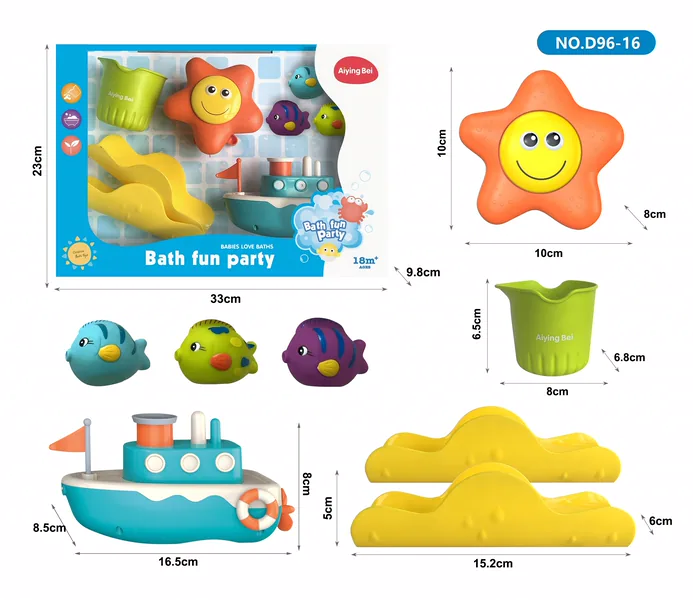
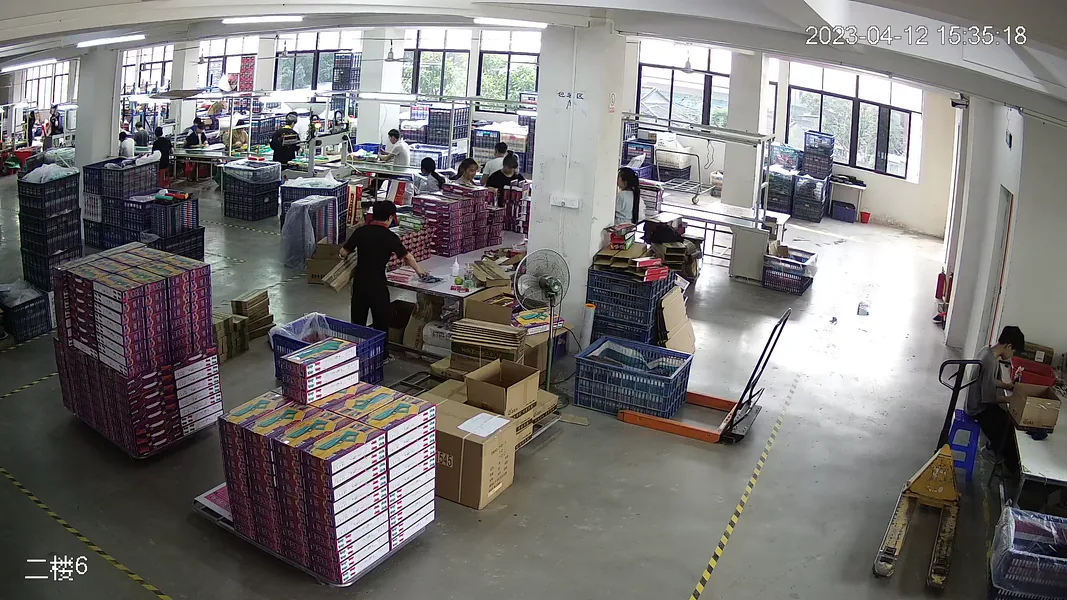

Shortlist criteria: what to ask, what to collect, when to fail
| Criterion: SKU-level age and intended-use evidence | Ask for: the age grade stated for the exact SKU, plus the design rationale (who the toy is for, how it is used, foreseeable misuse). Proof to collect: a written age/intended-use statement naming the SKU and configuration. Fail if missing: any age claim that only cites catalog category, product name, or material — e.g. a record listing material ABS and no age field leaves age evidence unverified. |
|---|---|
| Criterion: test report matching the product, age grade and standard edition | Ask for: the full report cover page (product description, model/SKU, age grade, standard edition) and the test list. Proof to collect: report identifying the product configuration, age grade and standard edition. Fail if missing: a one-page certificate summary, an expired edition, or a report whose product description does not match your SKU. |
| Criterion: destination-market conformity documents | Ask for: for the US, a Children's Product Certificate supported by testing at a CPSC-accepted laboratory; for the EU, the conformity documents tied to Toy Safety Directive 2009/48/EC. Proof to collect: CPC (product-specific) or EU Declaration of Conformity matched to the SKU scope. Fail if missing: a document presented as a factory-wide certificate, or a CPC with no underlying test report. |
| Criterion: small-parts and age-grading consistency | Ask for: how detachable parts, accessories and packaging components were assessed against the stated age grade. Proof to collect: the small-parts assessment reflected in the test scope. Fail if missing: an age grade that contradicts the physical configuration (small detachable parts on a product labelled for under-3s). |
| Criterion: traceability and permanence of markings | Ask for: the tracking label / lot marking plan and where it sits on product and packaging. Proof to collect: sample marking plus lot-control description. Fail if missing: no traceability plan, or markings that can be removed with the packaging. |
| Criterion: document control and versioning | Ask for: document date, standard edition, and the change process when materials or tooling change. Proof to collect: a controlled document set tied to the SKU and revision. Fail if missing: undated reports, or a supplier who cannot say which version applies to the current build. |
| Criterion: separation of confirmed vs. assumed | Ask for: the supplier to mark unknowns explicitly instead of filling gaps. Proof to collect: a record where missing fields (e.g. weight not stated) are flagged, not guessed. Fail if missing: a spec sheet with no blanks — that usually means fields were filled by assumption. |
Where baby toys are typically made — and what that means for age documentation
Chenghai (Shantou, Guangdong) is the reference cluster for injection-moulded plastic toys: bath toys, activity tables, push walkers, light-and-music products and educational plastic sets. Shantou more broadly covers the same plastic-toy supply chain plus packaging and tooling support. Yiwu is the general-merchandise and small-item hub — strong for mixed-container sourcing, weaker as a proxy for category-specific age grading. Yunhe is known for wooden toys and Yangzhou for plush, which matters because the age-risk profile differs by material and construction.
The supply-chain advantage is real but narrow: in Chenghai you can move from mould to sample to carton inside one industrial zone, which shortens iteration on a shell, a button or a battery compartment. It does not shorten compliance. A cluster gives you speed on form and cost; age grading still has to be built, tested and documented per SKU. That is why a factory's location should influence your shortlist, not your verification depth.
Be careful with a common inference trap: a product name or category is not age evidence. A catalog record for a SKU such as BTB350566 (Montessori Lock Activity Learning Table) may list material ABS plastic, a packing type, a reference MOQ and a reference price — and still contain no age field at all. The record itself may state that it establishes a catalog entry only, not certification, infant suitability, licensing, stock or factory capacity. Treat that as the accurate reading.
Same discipline for material names. A silicone/ABS early-education set or an ABS push walker tells you what the toy is made of, not who it is for. Age grading is a design decision supported by testing and intended-use analysis — it is not a property you can read off a material list or a photo.
Which documents actually prove age suitability — and which markets require them
For the United States, the core chain is: testing at a CPSC-accepted laboratory, then a Children's Product Certificate based on those results, identifying the applicable rules and the responsible parties. According to the CPSC's toy safety business guidance, children's toys generally require testing at a CPSC-accepted laboratory and a Children's Product Certificate. A CPC is product-specific — it should not be described or accepted as a blanket factory certificate. If a supplier sends a CPC, ask for the test report behind it and confirm the report's product description, age grade and rule set match your SKU.
For the EU, toys placed on the market must meet the applicable essential safety requirements under Toy Safety Directive 2009/48/EC, with CE marking and an EU Declaration of Conformity belonging to the conformity process and matched to the product scope. The General Product Safety Regulation (EU) 2023/988 is a separate legal instrument — it does not replace the Toy Safety Directive and does not itself provide SKU-level age-labelling rules. Ask for the toy-specific documents, not a GPSR summary.
On the US side, watch a dated change: the CPSC has signalled that beginning July 8, 2026, importers of most regulated consumer products will be required to electronically file certificate data. That raises the cost of late or sloppy documentation, because the certificate details have to exist and match at entry — not be assembled after a customs question.
Two mechanical checks catch most weak submissions. First, ASTM F963: confirm the exact edition and its incorporated regulatory status before you quote it, and make sure the report names the edition used. Second, tracking labels: per CPSC tracking-label guidance, tracking information should be permanent and support product identification where applicable, so review product markings, packaging and lot control together. A report that tests the right standard against the wrong physical configuration is still a fail.
How to audit a supplier's age claim without a factory visit
Start with a sample and a document request on the same SKU. Ask for the age statement, the test report cover and scope pages, the destination-market certificate, and the tracking-label plan — for one product, not a folder of everything the factory has ever tested. A supplier who can only answer in generalities about their quality system usually cannot answer at SKU level either.
Then reconcile the three against each other: does the age grade on the artwork match the age grade in the report, and does the report's product description match the sample in your hand? Mismatches here are the most reliable early warning. Where a field is absent — a missing weight, an unstated age, an undated report — record it as unresolved. A blank is not a zero, and it is not a confirmed absence; it is an open check.
Finally, test document control. Ask what happens to the documents when a material, mould or supplier of a component changes. A factory that treats the report as a live, revision-controlled record tied to the SKU will answer that quickly. One that treats certification as a one-time marketing asset will not. A published catalog record — reference MOQ, packing, carton data — is a starting point for a conversation, not proof of age suitability; any serious supplier should be able to layer SKU-level age evidence and destination documents on top of it.
If you are shortlisting from a plastic-toy cluster, this is also where you separate trading intermediaries from actual production. An intermediary can still be efficient for mixed containers, but they add a layer between you and the party who can produce age rationale and test scope. Ask who signs the conformity documents and who holds the tooling, then decide whether the extra layer is worth it for your category.
FAQ
What counts as age evidence for a baby toy SKU?
A SKU-specific age grade plus the intended-use rationale behind it, supported by test documentation that names the same product configuration and age grade. A catalog category, a product name, a material name or product imagery does not count — none of those are age evidence on their own.
Is a Children's Product Certificate a factory certificate?
No. A CPC is product-specific and is based on testing results, identifying the applicable rules and responsible parties. Treat any supplier presenting it as a blanket factory credential as a documentation problem, and ask for the underlying test report matched to your SKU.
Does the EU GPSR replace the Toy Safety Directive for age labelling?
No. GPSR (EU) 2023/988 is a separate horizontal product-safety instrument; it does not replace Toy Safety Directive 2009/48/EC and does not itself set SKU-level age-labelling rules for toys. For toy age grading, request the toy-specific conformity documents and the relevant standard details.
Can I rely on a supplier's MOQ and price sheet as product data?
No. Reference MOQ and reference price are commercial reference points, not confirmed terms and not age or compliance evidence. Reconfirm the sample, the current quote, the age evidence and the destination documents before you commit to a bulk order.
What should I do if the test report and the product artwork disagree on age?
Stop and resolve it before ordering. Ask the supplier to explain the discrepancy and to reissue the correct document or correct the artwork. An age grade printed on packaging that is not supported by the report is a compliance exposure, not a cosmetic issue.
How do I check age suitability for a product with small detachable parts?
Require that the small-parts assessment covers the actual product configuration, including detachable accessories and packaging components, and that it is consistent with the stated age grade. If the age grade and the physical configuration contradict each other, the documentation fails regardless of what the report says.
Sources
Request a quote or a factory audit
If you are sourcing infant and toddler toys from Chenghai or Shantou and need SKU-level age evidence, test documentation and destination-market paperwork reviewed before you commit to a bulk order, send us the SKU list and target markets. We will confirm what is on file, what needs to be requested, and what has to be tested — and you can request a factory audit alongside the quote.