
A baby toy catalog is a sales document, not a compliance record — so before you scale, run a quote–catalog–sample field consistency audit and mark every field confirmed, assumed, or unresolved. US children's-product certificates must be based on third-party testing, with a July 8, 2026 eFiling requirement for most regulated consumer products, and the EU is transitioning from Toy Safety Directive 2009/48/EC to Regulation (EU) 2025/2509, which enters into force on 1 January 2026 and applies from 1 August 2030 with a digital product passport. If your catalog lists a material and an MOQ but no age grade, no test report scope, and no responsible party, you do not have enough to scale. The practical outcome of this audit is a per-SKU sheet where every field is either backed by a document, explicitly flagged as an assumption, or listed as an open check you will resolve before the PO.
What the buyer needs to decide
- Treat catalog accuracy as a field-level problem, not a document problem: material, MOQ, age grading, packaging, color, and test scope must match across the quote, the catalog page, and the sealed sample.
- A CPSC Children's Product Certificate is product-specific and must cite each applicable rule; it is not a blanket factory certificate, and a factory audit or social-compliance certificate does not certify the safety of a specific plastic toy SKU (source: CPSC Children's Product Certificate).
- A type-test report does not automatically cover a later production lot — match report SKU, materials, colors, and production cohort to the PO before scaling (source: 16 CFR Part 1250 / ASTM F963).
- For EU-bound baby toys, audit the transition: Directive 2009/48/EC remains the operative regime until Regulation (EU) 2025/2509 applies from 1 August 2030, so confirm which regime your supplier's documentation references.
- A physical sealed golden sample on the QC shelf — not a photo, not a Canton Fair hero unit — is the reference that ends color and fit disputes on the second lot.
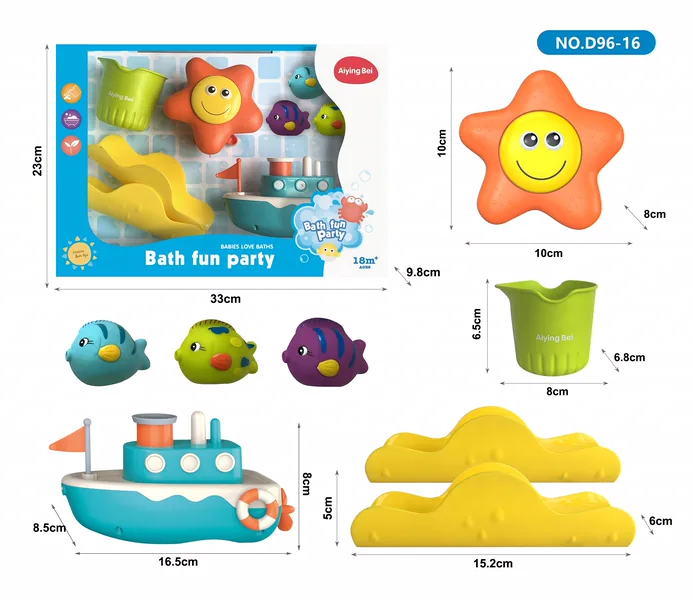
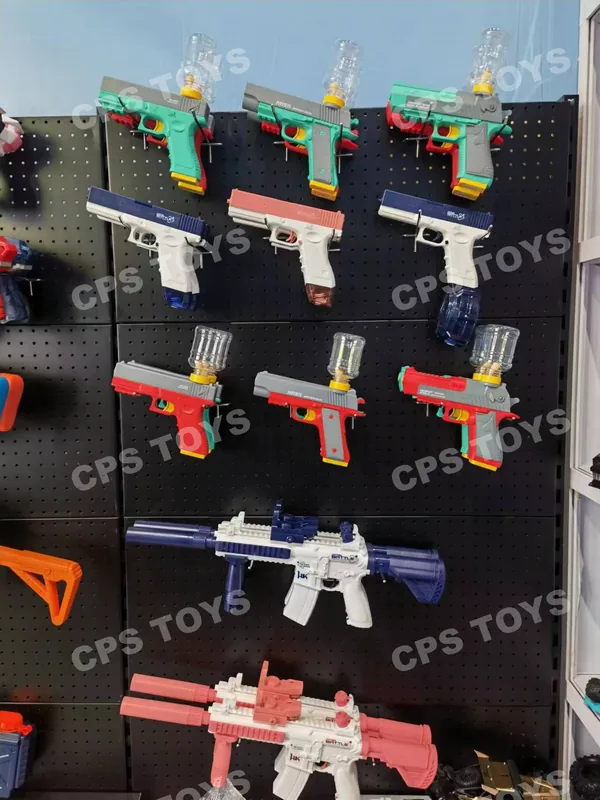
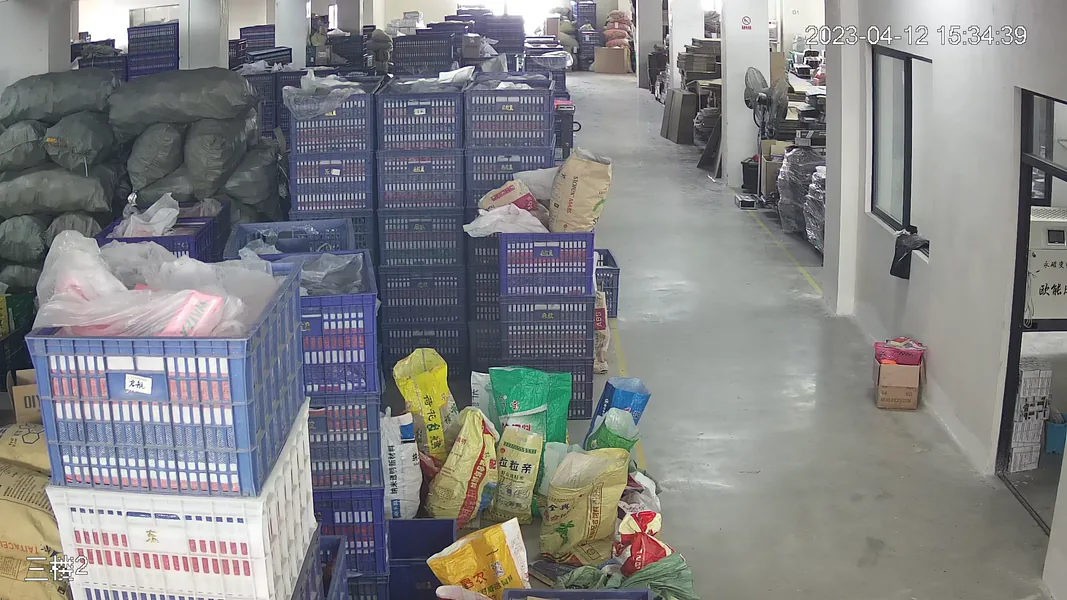
Why is a baby toy wholesale SKU comparison checklist different from a general catalog review?
A baby toy wholesale SKU comparison checklist forces you to compare identical fields across SKUs and suppliers; a general catalog review just tells you whether a page looks complete. The difference matters because baby toys sit in the highest-risk age band. The US Children's Product Certificate rules apply to products designed primarily for children 12 or younger, and testing requirements differ for children 12 and under versus 13+, so age grading is not a marketing field — it drives which rules apply.
In the EU, the Toy Safety Directive requires a conformity assessment, technical documentation, CE marking, and retention of the technical file and EC Declaration of Conformity for 10 years after the toy is placed on the market. Importers must ensure third-country toys meet EU requirements and must indicate their name and address on the toy, with exceptions where size or nature does not allow it. That means your catalog fields have downstream legal consequences: an age grade, a warning, or an importer address that does not match the sample is not a typo, it is a compliance gap.
The field set to audit on every baby toy SKU before scaling: model/SKU identity, material, age grade, small-parts status, battery or button-cell compartment design, packaging format, color reference, MOQ, quote scope (tooling, samples, production parts, decoration, testing, packaging, freight, taxes), test report scope, certificate scope, and responsible party. If any of those is blank or vague, mark it unresolved. Do not fill the gap with an assumption because the SKU is 'obviously' for babies.
Which fields in a supplier quote should match the catalog exactly?
The quote should separate tooling, samples, production parts, decoration, testing, packaging, freight, and taxes so the comparison is meaningful. If a supplier quotes a single FOB number with no breakdown, you cannot tell whether testing or packaging is included, and the second order will surprise you.
Then match the quote to the catalog on five fields that fail most often. First, color: 'approximate Pantone' is not a color-match guarantee, so ask what the tolerance is and whether the golden sample defines it. Second, packaging: kraft box with sticker, blister, display box, and retail carton are different cost and compliance profiles. Third, MOQ: a catalog MOQ and a quote MOQ for the same SKU should not differ. Fourth, documentation: ask whether material documentation is supplied per SKU, not per order. Fifth, age grade and warnings: these must match the sample label.
A recurring pattern in OEM squeeze-toy programs: the order is quoted with logo, approximate Pantone color, and kraft boxes with stickers, and the first shipment arrives with QC photos before shipment. The color is 'close' — and on the second campaign the buyer tightens the tolerance because 'close' was never a spec. The fix is a sealed golden sample and a written tolerance, not a longer email thread.
How do you audit sample-to-bulk consistency for baby toys?
You audit sample-to-bulk consistency by insisting on a physical, sealed, identified reference piece — not a photo and not a trade-show hero unit. At a Canton Fair booth the sample is often a hand-built hero, so the tool number and revision should be labeled on the table and a Fair photo should never be accepted as the production standard. Fair lighting lies. The revision card does not.
The mechanism is simple. The sealed golden sample sits on the QC shelf. Bulk is compared to that physical piece on color, fit, flash, and function. Retained samples should be identified by model and lot so a later complaint can be traced back to a production cohort. Buyers who approve only a photo pay for it on the second lot, because the photo cannot settle a color or flash dispute.
Defect handling is the other half. No AQL number should be invented in a catalog sentence. On the floor, a failed lot is isolated, the defect class is recorded, and release happens only after rework. If you want a numeric AQL, it comes from the agreed inspection plan on the PO. Ask the supplier to show you where that number lives in the order documents.
Which safety fields must be confirmed per SKU, not per factory?
Safety fields are SKU-specific and cannot be inferred from a factory-level certificate. A factory audit or social-compliance certificate does not certify the safety of a specific plastic toy SKU. A Children's Product Certificate is also product-specific and should not be described as a blanket factory certificate.
For US-bound toys, the certificate must be based on test results from a third-party, CPSC-accepted laboratory and must identify the product covered, cite each applicable CPSC children's product safety rule, identify the certifying firm and records contact, state the date and place of manufacture, state the date and place of testing, and identify the laboratory. If paint is involved, the certificate must include 16 CFR part 1303 in addition to the applicable ASTM F963 section. Certificates for electrically operated toys must list 16 CFR part 1505 instead of the corresponding ASTM F963 section.
For EU-bound toys, ask which conformity route was used — self-verification via harmonised standards or third-party verification by a notified body — and confirm the EC Declaration of Conformity and technical file are retained for 10 years. Chemical fields should be checked against the applicable restrictions, and sound-emitting toys should be checked against impulse and continuous noise limits. None of this can be established from a catalog photo.
Button-cell and compartment toys: the design check that precedes the function check
Button-cell toys are a compartment and warning problem, and the design check comes before the function check. Check screw closure, tool access, and the warning before discussing what the toy does. A cute electronic that opens with fingernails does not ship. US button-cell rules and the door design are the same conversation.
If a catalog page for a baby toy shows a battery compartment, ask for the closure design, the tool required to open it, and the warning label artwork. If the supplier cannot answer, mark it unresolved. Do not let a catalog category or a cheerful product image imply infant suitability — require SKU-specific age and intended-use evidence.
Quote, catalog, and sample fields: what to compare side by side
| SKU / model identity | Must match across quote, catalog, sample label, and test report. Mismatch = unresolved. |
|---|---|
| Material | State the material per SKU (for example ABS). Do not infer infant suitability from a material name. |
| Age grade | Confirm the stated age grade against the sample label and the applicable rule set. Testing requirements differ for children 12 and under versus 13+. |
| Small parts / detachable components | Assess for the actual product configuration, including assemblies, accessories, and packaging components. |
| Battery / button-cell compartment | Confirm closure design, tool access, and warning artwork before discussing toy function. |
| Packaging format | Kraft box, blister, display box, and retail carton carry different cost and labeling implications. |
| Color reference | 'Approximate Pantone' is not a match guarantee. Define tolerance or rely on a sealed golden sample. |
| MOQ | Catalog MOQ and quote MOQ for the same SKU must not differ. Where they differ, ask which applies to the PO. |
| Quote scope | Separate tooling, samples, production parts, decoration, testing, packaging, freight, and taxes. |
| Test report scope | Match report SKU, materials, colors, age grade, standard edition, and production cohort to the PO. |
| Certificate scope | A CPC is product-specific. Verify it names the product and cites each applicable rule; it is not a factory certificate. |
| Responsible party | Identify the manufacturer, importer, and records contact. EU importers must indicate their name and address on the toy, with limited exceptions. |
When should you distrust a catalog field?
Distrust any field that is asserted without a document or a physical reference. The three recurring failure patterns are photo-only approvals, factory-level certificates presented as SKU certificates, and MOQ or color values that change between the catalog, the quote, and the sample.
Photo-only approval fails because lighting, white balance, and lens distortion change color and surface appearance. A factory-level certificate fails because it does not name your SKU, your material, or your production cohort. A moving MOQ fails because it signals the catalog is a marketing artifact rather than a quotation basis.
A fourth pattern: a type-test report that is older than the production lot. A report does not automatically cover a later lot. Match the report to the PO before you scale, or you are buying someone else's test.
What does a finished audit look like before you place the PO?
A finished audit is a one-page-per-SKU sheet where every field is confirmed, assumed, or unresolved, with the evidence named. Confirmed fields cite a document, a sealed sample, or a written tolerance. Assumed fields say what you are assuming and why. Unresolved fields have an owner and a date.
Then the scaling decision becomes mechanical. If age grade, small-parts status, and the certificate scope are unresolved, do not scale. If those three are confirmed and only packaging artwork is unresolved, you can scale on a small first lot while the artwork closes. That is a real trade-off, and it is better than a blanket 'the supplier seems fine'.
This is also where retained samples earn their keep. Identify them by model and lot, keep the sealed golden sample accessible, and treat the revision card as the authority when a dispute starts. Emails do not settle a color fight. The physical piece does.
FAQ
What is the first thing to check in a baby toy catalog before scaling an order?
Check whether age grading and intended use are stated per SKU and match the sample label. Testing requirements differ for children 12 and under versus 13+, so a vague or missing age grade is a compliance gap, not a formatting detail. Do not infer infant suitability from the catalog category, material name, or product image.
Can I rely on a factory audit certificate as proof that a baby toy SKU is safe?
No. A factory audit or social-compliance certificate does not certify the safety of a specific plastic toy SKU, and a Children's Product Certificate is product-specific rather than a blanket factory certificate. Ask for the SKU-level test report and certificate, then match the product, material, age grade, and rule citations to your PO.
How do I verify a Children's Product Certificate for a baby toy order?
Verify that it identifies the product covered, cites each applicable CPSC children's product safety rule, names the certifying manufacturer or importer and a records contact, states the date and place of manufacture and testing, and identifies the CPSC-accepted laboratory. For toys with paint, confirm 16 CFR part 1303 appears alongside the applicable ASTM F963 section; for electrically operated toys, confirm 16 CFR part 1505 is cited.
Does an EN71 test report cover my whole production run?
No. A type-test report does not automatically cover a later production lot, so match the report's SKU, materials, colors, standard edition, age grade, and production date or cohort to the PO. Also confirm which conformity route was used and that the EC Declaration of Conformity and technical file are retained for 10 years.
What MOQ should I expect from a Chenghai baby toy supplier?
MOQ varies by SKU and by material, decoration, and packaging, so there is no single Chenghai number. Compare the catalog MOQ with the quote MOQ for the same SKU; where they differ, ask which one governs the PO. Treat any MOQ that moves between documents as an unresolved field rather than a negotiating position.
How do I handle a color mismatch between the sample and bulk production?
Rely on a sealed golden sample and a written tolerance, not a photo. 'Approximate Pantone' is not a color-match guarantee, so define the tolerance before the PO and compare bulk to the physical reference on color, fit, flash, and function. Retain samples identified by model and lot so a later complaint can be traced to a production cohort.
What changes for EU baby toy orders in 2026?
Directive 2009/48/EC remains the operative regime, while Regulation (EU) 2025/2509 enters into force on 1 January 2026 and applies from 1 August 2030 after a transition period, adding a digital product passport accessible via a data carrier. For orders placed before that application date, confirm which regime your supplier's documentation references.
Sources
Request a quote or a factory audit
Send us the SKU list you are evaluating and we will return a quote with tooling, samples, production parts, decoration, testing, packaging, freight, and taxes broken out, plus the MOQ that applies to the PO. If you want to verify a supplier before scaling, ask for a factory audit and a sealed golden sample identified by model and revision. BabyToyBulk will tell you which fields are confirmed, which are assumed, and which are unresolved — the same sheet used on the floor in Chenghai. Sources for the regulatory points in this article are linked below.