
For baby toys imported into the United States, the importer issues the required Children’s Product Certificate; a retailer buying domestically verifies the file without becoming its certifier. A retailer that imports the goods also carries importer responsibilities. Use a baby toy import document checklist to identify the responsible legal entity, connect the evidence to the actual product configuration, and record an accept, hold, or return-for-correction decision before the relevant purchase, shipment, or listing gate.
The laboratory report supports certification but is not the certificate itself. For covered imported children’s products, the importer—not the overseas factory or testing laboratory—issues the CPC using the supporting evidence. This article uses the US framework; it does not establish requirements for EU or other destination markets. CPSC CPC guidance
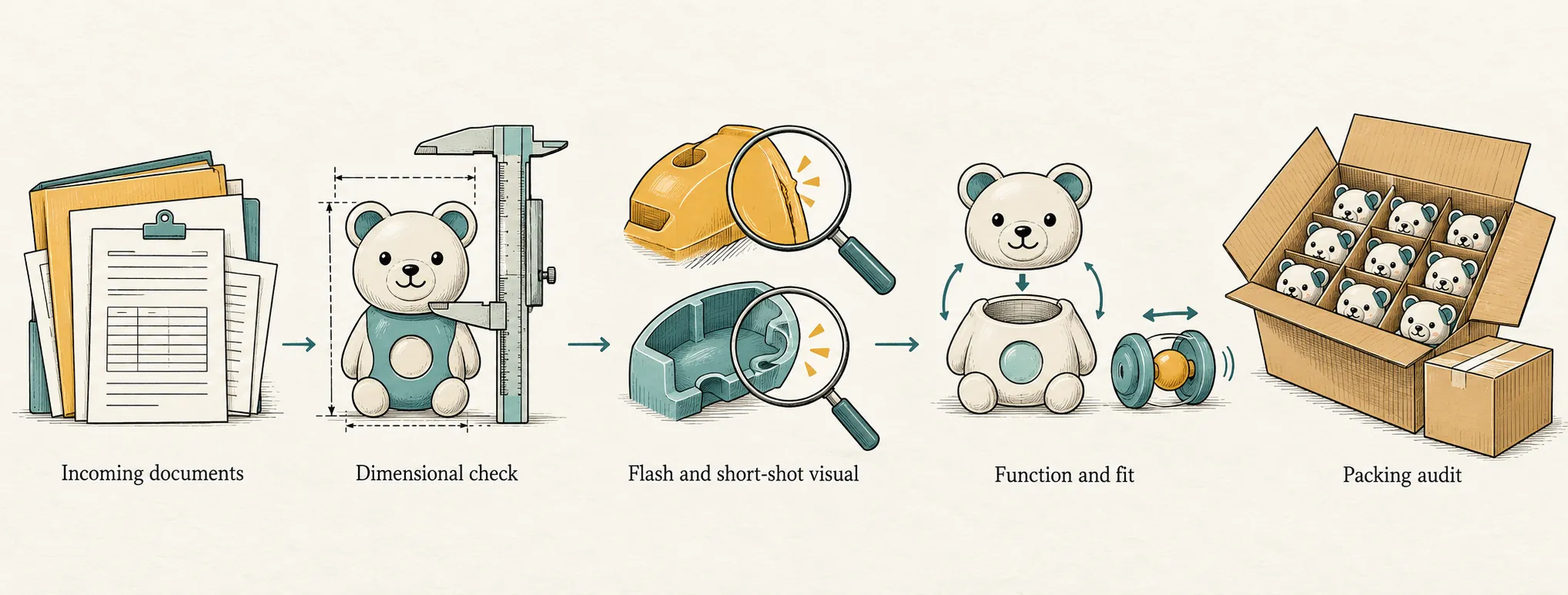
Which party owns certification, and what must the retailer verify?
The importer owns the US certification task for covered imported products; retailer verification is a separate purchasing control, not a substitute for that certification. A brand owner is not automatically the certifier merely because its logo appears on the box. Establish whether it is also acting as the importer, and name the responsible legal entity in the product file.
For a retailer buying from a US importer or distributor, obtain access to the applicable CPC and reconcile it with the ordered product. CPSC guidance requires the certifier to furnish the certificate to distributors and retailers. Keeping the certificate, relevant supporting evidence, approved specifications, and review history together is a recommended purchasing practice; the complete internal file described below is not presented as a universal statutory retailer checklist. CPSC CPC guidance
Do not assign certification responsibility from a DDP price, freight quote, or warehouse shipping label. Record the importer’s legal name, the certification contact, and the party coordinating entry filing explicitly. A broker may transmit information, but that operational arrangement should not obscure who is responsible for certification.
Before choosing the document requirements, establish intended age, intended use, destination, and construction. A catalog’s baby-toy category, an ABS material entry, or product imagery does not establish infant suitability. For products intended for children under three, a warning cannot make otherwise prohibited small parts acceptable. Review the product’s actual intended use rather than treating a warning sticker as a classification fix. CPSC small-parts guidance
Who prepares, issues, holds, and checks each document?
Assign a named owner and evidence reference to each document family, separating pre-PO specifications from final shipment records. The table combines the US certification responsibilities identified above with recommended commercial controls; it does not turn every purchasing record into a legally prescribed document.
Before PO release, agree the product baseline, responsible importer, evidence coverage, and draft packaging. A final invoice or packing list is not a pre-PO prerequisite. For a new configuration, a buyer may authorize development or production subject to explicit testing and certification conditions, while keeping shipment release blocked until those conditions are satisfied.
| Product classification, age, and intended-use record | Timing: establish before PO approval. Originator: manufacturer supplies design and use information; importer coordinates the US applicability assessment. Approval: importer’s designated compliance reviewer. Holders: importer and buyer. Buyer checks: intended age/use, product photographs, functions, accessible components, marketing, and assessment reference. Mismatch consequence: pause the applicability decision and escalate conflicting age or use evidence. This record does not prove that the product passed testing. |
|---|---|
| Purchase order and controlled product specification | Timing: approve the baseline before PO release; control later revisions. Originators: buyer and supplier. Approval: authorized purchasing and supplier representatives. Holders: both parties, with importer access. Buyer checks: model aliases, specification revision, materials/components, functions, accessories, packaging, and destination. Mismatch consequence: return the specification for correction or approve a documented revision before the affected work proceeds. A PO is not safety certification. |
| Packaging artwork and warning-language version | Timing: review drafts before PO approval; approve production artwork before printing. Originator: supplier or artwork team. Approval: designated buyer/brand reviewer, with importer compliance review as applicable. Holders: supplier, importer, and buyer. Buyer checks: artwork revision, age statements, warnings, product identity, traceability marking layout, and consistency with intended use. Mismatch consequence: stop printing or listing use of the affected version pending correction. Approved artwork does not establish that production goods carry it. |
| Supporting test report | Timing: review existing coverage before PO approval where available; close required testing before certification and shipment release. Issuer: testing laboratory; use a CPSC-accepted laboratory for testing subject to that requirement. Holders: importer and testing client; buyer obtains the relevant evidence needed for review. Buyer checks: report number, sample photographs, model references, construction, test dates, laboratory identity, applicable requirements, results, and scope. Mismatch consequence: hold the certification decision until coverage is reconciled. A report is not a CPC and does not automatically cover a similar-looking toy. |
| Children’s Product Certificate | Timing: review an existing certificate during sourcing where applicable; complete or confirm the applicable certificate before covered goods ship. Issuer: US importer for imported covered products, or domestic manufacturer for domestically manufactured products—not the laboratory. Holder: certifier; furnish it to distributors and retailers as required. Buyer checks: product identification, applicable rules, certifier identity, records contact, manufacturing dates/place, testing dates/place, and laboratory information. Mismatch consequence: return the certificate to its issuer for correction and hold the affected release decision. A CPC does not replace commercial shipment records. |
| Certificate eFiling data and filing reference | Timing: resolve the filing route before dispatch and meet the applicable entry-stage requirements. Originator: importer provides certificate information; a broker or other authorized filing party may transmit it. Holders: importer and filing party; buyer records the relevant reference when responsible for the release gate. Buyer checks: product/certificate linkage, responsible importer, filing route, applicable entry treatment, and submitted data. Mismatch consequence: escalate to the importer and filing party before the affected filing proceeds. Electronic submission does not replace the underlying certification evidence. |
| Tracking-label artwork and production traceability record | Timing: approve the marking scheme before production; reconcile actual markings and production records before shipment acceptance. Originator: manufacturer supplies production and marking information; importer coordinates review for the US product. Holders: manufacturer and importer; buyer retains relevant photographs and references. Buyer checks: actual product and packaging markings, manufacturing location/date information, and batch or cohort identifiers as applicable. Mismatch consequence: hold traceability acceptance until the shipped goods can be connected to their production record. A printed code alone does not prove tested construction. |
| Commercial invoice | Timing: review the final shipment version when the sale and shipment details are established. Issuer: seller. Holders: seller, buyer/importer, and relevant entry-service provider. Buyer checks: seller and purchaser identities, product descriptions, quantities, values, currency, and PO/model references. Mismatch consequence: return the invoice to the seller for reconciliation before the affected commercial or entry submission. An invoice does not establish product safety certification. |
| Packing list | Timing: obtain the final version after actual packing details are established—not before the order exists. Originator: supplier or packing operation. Approval: supplier’s shipping contact. Holders: supplier, importer, and receiving team. Buyer checks: package count, carton marks, model allocation, units packed, and connection to the shipment. Mismatch consequence: reconcile the list with packing and dispatch records before accepting the affected shipment record. A packing list does not demonstrate test coverage. |
What changes with eFiling, testing exemptions, or a revised toy?
Electronic filing changes how applicable certificate information is submitted; it does not turn a laboratory report into a CPC or transfer the importer’s certification task to the retailer. CPSC’s certificate guidance identifies July 8, 2026 as the eFiling applicability date for most regulated imports requiring certification. Confirm the shipment’s entry category and applicable transition provisions, including foreign-trade-zone treatment, rather than applying that date indiscriminately. CPSC CPC guidance
A testing exemption for a material or requirement does not, by itself, remove a covered product’s certification obligation. Record the applicable basis for the exemption and have the certifier determine how it is reflected in the certificate; do not interpret an exemption as permission to omit the entire product file. CPSC CPC guidance
A material change requires assessment of the affected requirements, applicable retesting, and a new CPC based on the resulting passing tests. Separate changed components from unchanged ones so the review addresses the actual modification. A new internal item number, a later batch, or an older report date alone does not settle whether additional testing is necessary. Consider tested construction, production-testing obligations, changes, and retailer policies separately. CPSC third-party testing guidance
How do you reconcile a baby bath toy’s documents field by field?
Reconcile the bath toy by comparing one controlled product baseline with the sample, report, certificate, packaging, and shipment—not by matching product names alone. The example baseline is a catalog-listed baby bath toy with ABS recorded as its material and display-box packaging in a catalog snapshot dated October 9, 2026. Those catalog attributes identify a purchasing reference; they do not establish complete construction, infant suitability, or certification.
Use the following as a buyer reconciliation method, not as an official CPSC inspection checklist. Record the actual document reference and observation for every comparison.
| Product identity and revision | Specified target: the ordered bath-toy model and approved specification revision. Compare: PO, sample photographs, report sample identity, CPC description, invoice, and packing list. A retailer item number may differ from the factory model if a documented cross-reference connects them. Action: return an unexplained identity mismatch to the supplier and importer; do not reject report coverage solely because internal item numbers differ. |
|---|---|
| Age and intended use | Specified target: the SKU-specific age/use assessment approved for the US configuration. Compare: product features, intended play, packaging, instructions, listing copy, and test scope. Action: hold classification approval if the stated age conflicts with intended use; do not infer infant suitability from the words baby bath toy. |
| Materials and components | Starting reference: ABS is the catalog material entry, not a complete bill of materials. Compare: controlled component/material list, actual sample, report descriptions, and change history. Include other materials or components only where actually present. Action: send unexplained construction differences to the importer’s compliance reviewer for coverage and material-change assessment. |
| Importer, manufacturer, and certificate fields | Specified target: the responsible legal entities and manufacturing details for the ordered goods. Compare: supplier production information, CPC certifier and manufacturing fields, and the entry responsibility record. Action: resolve conflicting names, addresses, facilities, or unexplained trading-name aliases with the certificate issuer. The seller, factory, and importer need not be the same company. |
| Test evidence and applicable requirements | Specified target: evidence covering the actual construction and applicable US requirements. Compare: laboratory identity, report number, sample photographs, test dates, cited requirements, and the CPC’s testing information. Action: hold certification acceptance where the relationship is unclear. A generic report title or similar product photograph is not sufficient reconciliation. |
| Packaging and production markings | Starting reference: display-box packaging. Compare: approved artwork revision, production photographs, age/use statements, warning text, and actual traceability markings. Action: return an unapproved packaging substitution for review and connect the production identifiers to the relevant manufacturing record. |
| Shipment and production connection | Specified target: the goods actually packed against the approved PO and configuration. Compare: production record, dispatch reference, invoice quantities, packing-list allocation, carton marks, and available product/batch identifiers. Action: keep an unresolved shipment-to-product connection on hold while the supplier and importer reconcile it. Consistent paperwork supports traceability but does not reveal every undisclosed physical change. |
What must the final accept, hold, or return record contain?
Accept the file only for the specific gate it supports; hold unresolved consequential items, and return inaccurate documents to their issuer for correction. Pre-PO approval is not shipment approval, and returning a document for correction is not the same decision as returning physical goods.
Use one review record per controlled product configuration and destination. Each document row should either reconcile or carry an open item with a named owner and a decision about the affected gate. Record responsible people and legal entities, not only department names.
| Identity and review gate | Record product/model and aliases, specification revision, US destination, supplier, importer legal entity, PO or proposed-order reference, and the gate being reviewed: pre-PO, production artwork, shipment, receiving, or listing. |
|---|---|
| Target versus observation | For each document family, record the specified target, observed field or physical evidence, document/report/artwork reference and revision, and the reviewer’s reconciliation result. Distinguish a draft awaiting scheduled completion from a final document containing incorrect information. |
| Decision and conditions | Record accept, hold, or return for correction; identify the exact configuration and gate covered. State outstanding conditions and which action remains blocked. Do not use a general approved status that could be mistaken for certification or permission to ship. |
| Responsible approver and date | Record the buyer’s named approver, approval date, importer certification contact, and any qualified compliance reviewer responsible for an applicability determination. Purchasing approval does not replace the importer’s certificate. |
| Follow-up and closure | Assign each open item to a named person and legal entity, with a buyer-set due date. Close it with the corrected evidence reference, closure observation, reviewer, and date. Retain the superseded version and decision history so the reason for release remains traceable. |
When should the buyer escalate instead of releasing the file?
Escalate when product classification is ambiguous, importer identity is unresolved, a cited requirement or edition may not apply, tested construction differs from the ordered toy, or a post-test change has not been assessed. Place the affected gate on hold while the named owner resolves the issue; a missing record alone does not prove dishonesty or establish that the product will fail.
For an EU or other non-US destination, build a separate market-specific responsibility map before using the file for that market. Do not treat a US CPC, US eFiling record, or US test reference as universal authorization to sell.
A coherent document set connects the tested configuration, certified product, approved packaging, and shipped goods. It supports traceability and an informed purchasing decision; it does not guarantee safety, legal compliance, or customs clearance.